Slim Borgudd's history
"Made in Sweden" - a creative musical environment
Made in Sweden emerged from a creative musical environment in Sweden in the 1960s. At this moment in time most bands played pop music, but there also existed groups with a rougher approach, such as Outsiders, Trolls, T-bones, Les Apaches, Mecki Mark Men, Slim´s Blues Gang, Janne Schaffer (with his different groups), Lea Riders Group and Grapes of Wrath, to mention a few. The most common venues for these bands to play were at the student unions, but there also existed a number of clubs in Stockholm. To mention a few, there was Filips on Regeringsgatan, which was the home for the psychedelic oriented bands, such as the famous duo Hansson and Karlsson. Another club was Pinch´m on Norrlandsgatan, which housed the more pop focused bands. Gyllene Cirkeln (The Golden Circle, which today has become a restaurant, but rumours has it that it will re-establish itself as the jazzclub it once was). The club became a home stage for Made in Sweden. These clubs do not exist today, other than in people´s memories. Here played several famous Swedish groups of the 1960s, out of which Made in Sweden emerged.
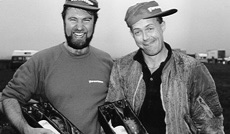
The members of Made in Sweden, Georg ”Jojje” Wadenius (guitar and vocal), Bosse Häggström (bass) and Tommy ”Slim” Borgudd (drums), already had musical careers with different groups before they got together and formed Made in Sweden. In the early 1960 Georg Wadenius had been playing with a Stockholm based group called Stubinerna. They played at local venues, mostly at different student unions, in the Stockholm area. During the summer of 1966 they were engaged by Club 33 to play at a hotel in Romania. After a gig one night they were approached by some Romanians involved in the music industry, and asked to make a record. Some days later they flew to Bucharest and the Electrecord Studio, to make a 10" inch record, Muzica De Dans. It was cut in one day, recorded with one microphone and consisted of ten songs, mostly covers by the Beatles, but also with one composed by themselves, I Can’t Find Your Number.
In 1967 Wadenius left Stubinerna to become a member of Grapes of Wrath. Another member, Christer Eklund, was a schoolfriend of Wadenius. During primary school they had a jazz quartet together with Björn Stolt and Ola Brunkert. In the early 1960s they used to play at the popular jazz competitions at Medborgarhuset in Stockholm. Here different groups met and played jazz standards. Out of these jazz oriented groups emerged some of the groups that in the late 1960s became part of the Swedish progressive and psychedelic music scene.
Wadenius did not stay long as a member of Grapes of Wrath before he moved on to become a temporary member of Lea Riders Group. It was here that he met Bosse Häggström and Tommy ”Slim” Borgudd. In spring of 1968 Wadenius became engaged in writing music for a theatre school play called Life is Beautiful and Free, written by Claes Von Rettig. At that time Lea Riders Group were braking up and Wadenius asked Slim and Bosse if they wanted to be part of the play, and perform the music live on stage.
During the spring semester of 1968 they toured schools in the Stockholm area.
In the early summer of 1968 Slim arranged a job in Spain (through some old contacts at Club 33), where Wadenius and Häggström joined up to play at a nightclub in Sitges. They did not have a band name, and their repertoire consisted of a handful of songs, mostly covers. At the time they were inspired by Wes Montgomery, and came to play his versions of Elenore Rigby and A Day in the Life. There was also a strong influence by Charles Lloyd, who’s music they drew upon as well. They also wrote some blues oriented songs.
Wadenius jazz influences came from growing up in a musical family. His mother was a pianist who listened to Oscar Peterson and Bill Evans. At an early age Wadenius listened to Ray Brown’s bass playing, as well as by Sam Jones, the bass player in Cannonball Adderley´s quintet. His first instrument then became the bass guitar, which he played together with his mother. When he was 13-14 years old he started to play jazz guitar, and was influenced by Jim Hall and Rune Gustavsson. In asking him about switching from bass to guitar Wadenius answered: ”In retrospect I should have become a bass player, because I had the guitar technique and sensibility as a bass player. I played what was right for a bass player but I had guitar technique.” This can be heard on recordings Wadenius made in the mid-1960s, when he was a highly sought after studio musician and played bass on many records with popular Swedish artists.
The band planned to stay in Sitges through the summer and into the fall, playing at different clubs. But during the summer they were contacted by Carl-Axel and Monica Dominique, whom they had met earlier that spring and who had asked them to help write the music for a play called Peter Pan. They were also asked to tour the Stockholm primary schools again with the play Life is Beautiful and Free. Having very little money, they decided to pursue these options and returned to Sweden.
Back in Stockholm they immediately started to work with Carl-Axel and Monica Dominique, as well as touring the schools in Stockholm. It was during this time they began calling themselves Made in Sweden. The name was invented by art director Yngve Sohlberg a friend of Borgudd and Häggström during their time with Lea Riders Group. At first they found the name Made in Sweden a bit silly, but soon got accustomed to it and decided to keep it. In September-October of 1968 they started to play at Gyllene Cirkeln (The Golden Circle), and it wasn’t long until the “word” spread about this new group that played a mix of jazz and rock, with a unique sound, which at the time was something completely new.
During the fall of 1968 Made in Sweden played a lot of gigs. In the daytime they toured with the school play, and 3-4 evenings per week they performed at Gyllene Cirkeln, until two-three o´clock in the morning. Among all this hectic work Sonet records contacted the band to make an album. So they went into a studio and recorded their first album Made in Sweden (With Love). Rune Öfwerman produced the album, which consisted of nine songs, mostly covers. This was finished in six hours, including the mixing of the album. It quickly sold more than 10,000 copies and won a Grammy Award. A second Grammy Award was also won for a children album called Regnbagslandet. They went on to record 4 albums over the next two years.
Made in Sweden on record was not the same as on stage. They seldom played songs they recorded. Instead, their performances were mainly completely improvised music, built around a note or rhythm that could last for 5 to 20 minutes, and were affected by the sentiments and feel of the moment. This can be heard on their live album Live! At the ”Golden Circle”. The thirteen minute rendition of Beatles’ tune A Day in the Life is a good example of their skill in improvising, turning the song into a freeform jazz piece with a Hendrix style guitar solo.
The band toured mainly in Sweden, but also performed at festivals and clubs in Denmark, Norway and Finland. They seldom supported other artists but when Frank Zappa played at the Stockholm Concert Hall October 1, 1968 they were the supporting act. Being a live band they had not enough time to record and experiment in the studio. So, the albums were made with limited rehearsals.
Their second album, Snakes in a Hole, was partly recorded in Denmark and partly in Sweden. In Denmark Philip Voss was contacted. He had built his own studio with a ten channel tape-recorder, and was considered to be a highly accomplished recording technician. Someone at Sonet records had contacted the famous Danish jazz violinist Svend Asmussen and asked him to participate on the album. ”Asmussen has always had an eye for new things and he got interested”, says Wadenius, so he decided to play violin on some tracks. The album was recorded in spring 1969. The cover design was made by the famous artist Ardy Strüwer.
During the fall of 1969 a live record was recorded (Live! At the ”Golden Circle”). Produced by Roger Wallis, an English immigrant who became involved in the Swedish popular music industry in the late 1960s. During the 60’s Wallis had a band called Science Poption, but his academic interests turned him away from a musical career and today he is a well known researcher on popular music. He wrote the lyrics to some of the songs on this live album.
Made in Sweden’s fourth and final album, Made in England, was recorded in London in 1970. It had been a long time dream of the members to play and record abroad. Other Swedish bands had done it before, such as Mecki Mark Men in the United States, and ”if they could, why not us,” they reasoned. Made in Sweden had been touring England before as support group to Colosseum. Where they became friends with Tony Reeves, Jon Hiseman and Dick Heckstall-Smith.
When Sonet opened an office in London they wanted the band to make an album in England. Tony Reeves, being a great fan of their music, became the producer. He also wrote the notes on the backside cover of the English version of the album, with the title Mad River. The album features a re-recording of the song Little Cloud from the album Snakes in a Hole. Here with harder and rougher guitar parts, with piano and organ filling up the background. While recording the album in London they played at various small clubs, but also at The Marquee and the Plumton Festival. At the time there were talks about Häggström joining The Animals, but he turned their offer down.
Shortly after the album was finished, Made in Sweden dissolved. There were several reasons for this. One was that they didn’t develop musically, which gave rise to different opinions and strife’s between the band members. Financial pressure was another, with the fact that they were not earning very much money. Their record contract gave them next to nothing in royalties, and from the continuous touring they barely broke even. So there was not enough money from their music to live on. Wadenius, for example, had to augment his income in recording sessions with other Swedish artists, such as Merit Hemmingson, Gunnar Wiklund and Cornelis Vreeswijk. The band also toured with other artists, such as Tommy Körberg and Doris Svensson, but had very few opportunities to rehearse and play their own material.
Another reason for the split up was that their accountant disappeared with some of their earnings. Early in the career they had formed a company called Made in Sweden, Inc. Since they had no knowledge about finances they hired an accountant. He disappeared one day with the “cash box” which lead to bad consequences for the band. The tax magistrate wanted Wadenius to pay the taxes for the bands total income. It all ended up with each of the members having to pay up large amounts.
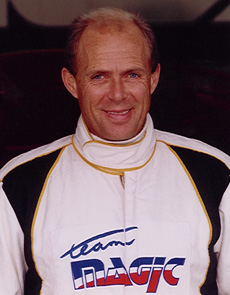
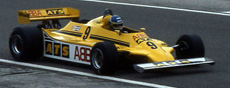
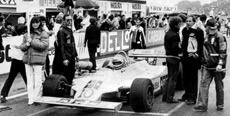
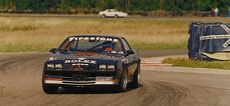
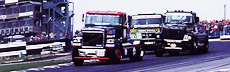
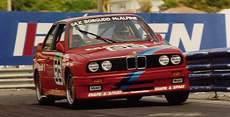
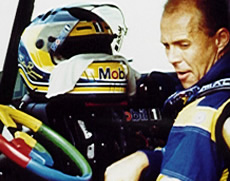
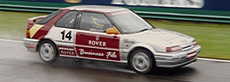
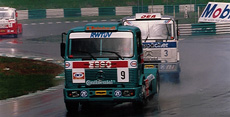
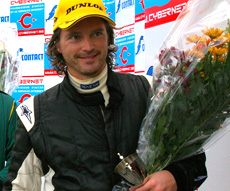
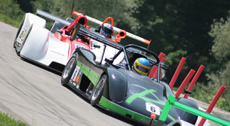
When Made in Sweden split up Wadenius and Borgudd again joined up with Carl-Axel and Monica Dominique forming the band Solar Plexus. In this outfit Wadenius switched from playing guitar to bass. He did not stay long in the band and when he in 1972 moved to the United States, to become a member of Blood, Sweat & Tears, Borgudd turned down an offer from the Dutch group Ekseptions to stay home with Bosse Häggström joining Solarplexus on bass. During Made in Sweden´s career Borgudd was also driving racing cars. He became a top racing driver and became Swedish Formula 3 Champion. After leaving Solar Plexus in the late 1970s he went full time car racing and moved to England where he became a Formula One driver. After two seasons in Formula One driving for ATS and Tyrrell he switched to other formulas like Touring cars, Sports-cars and finally to Truckracing. He has been among the top Truckracing drivers in Europe and has won the European Championship titles 4 times.
Now, with the global interest in music from the 1960s and 1970s, the reissuing of Made in Sweden on CD is a long awaited event. It gives the opportunity for new listeners all over the world to enter the music of one of Sweden’s pioneering groups in the area of progressive music.
Click here to go back to Slim Borgudd's Career Summary
|